AZ Dog Sports

A Training Gym for Dogs • An Academy for Dog Trainers

AZ Dog Sports • Dog Training Gym

602-237-6775

Sign Up For Classes

AZ Dog Smart Academy • School For Dog Trainers

  • About / Contact
    • About Us
      • Contact Us
      • Dog Trainer Videos
    • Services
      • Dog Training Classes
      • Private Lessons
      • Day Training
      • Board & Train
    • Our Trainers
    • FAQ – Frequently Asked Questions
    • Testimonials
  • Train Your Dog
    • Dog Training Class Calendar
    • In-Home Dog Training
      • Platinum Package
      • Custom 8 Package
      • Lucky Pup Package
      • Virtual Dog Training Sessions
    • Outdoor Dog Training
      • Outdoor Training Classes
      • Swim Lessons
    • Puppy Training Classes
      • Puppy Training Classes
    • Dog Obedience Training
      • Dog Sports Classes
      • Day Training
      • Board & Train
      • Behavior Dog Training
  • Become a Dog Trainer
    • How do I become a dog trainer?
  • Service Dog Training
  • More…
    • Blog
    • Outside Resources
Home » Blog

10 Tips For Bringing a New Dog Into My Household

What’s the best way to bring a new dog into my household?

I am a proud hu-mom to a total of five critters, four of whom live full time in my house. I have three dogs, a horse and a cat (who hasn’t decided on his official species designation.) Through my career as a trainer I’ve spent countless hours working on bringing a new dog into my household.

I have always had success with incorporating new animals, and it isn’t only because I’m a professional.

The secret to bringing a new dog into your household is simply, being properly prepared.  In today’s world, families are as dynamic as the weather.  Children moving back in with parents, dating couples just starting out with their first home, or blended families learning how to peacefully cohabitate…are just a few examples of situations where dogs must learn to live together with other dogs.

No matter your life situation, these 10 tips can help ensure any new puppy additions happen smoothly.

Consider the entire family when deciding on a new member

Once the decision has been made about where this new dog is coming from, consider the ages of the household and how this new energy will impact the pups and people already living there. A puppy can breathe new life into a senior dog, or be a source of constant agitation. The impact the new dog has on your established pets will depend a lot on your preparedness. You need a plan in place to make sure everyone can get along through the various growing pains. One of the best ways to make sure everyone gets along is to take time to make your decision, meet the new puppy or dog several times, and have them meet your entire family before coming home.

Choose a neutral environment for the introductions if you can 

This will look different depending on the age and temperament of the dogs involved. If you have a dog who is unsure of new dogs, having the dogs meet in an environment your dog already enjoys may be a good option. Your front yard or somewhere in the neighborhood can work too, just try to eliminate extra stresses like barking dogs or noisy yard work. With a new puppy who needs to be careful until fully vaccinated, meeting in the backyard usually works.

Make your environment as successful as possible

This may mean removing items that your current dog or the new dog might become possessive about. Pick up dog toys and chew bones before giving the new member a chance to explore with their new housemates.

Spend time bonding with all of the dogs in your house

Giving each dog one-on-one time will help keep your relationship strong, making the transition of sharing you much easier.

Find something everyone enjoys

This could be playing fetch, or even getting belly rubs. Having a dog watch another dog enjoy an activity shows them that dog is fun.

Play the name game

Teach each dog what their name is, and make it clear who you are talking to and rewarding.

Don’t be afraid to keep the new dog on-leash

Yes, even inside the house when you aren’t going anywhere or doing anything except living in your house. By keeping the new addition close by and having them follow you around for a few days, you are showing them exactly HOW to behave in your house. You are right there to redirect them from behaviors you’d rather they didn’t do, and most importantly reward them for good behavior and good choices.

Play it safe initially

Even with a new puppy, it’s a good idea to make sure feeding time goes smoothly and no one feels crowded. Feed your new dog or puppy in an enclosed space such as their kennel, but where the dogs can still see each other if it’s safe to do so. Establish your normal routines early on, and have the new dog follow the feeding routine you already have in place.

Go for walks together

Dogs love to travel together, and this is one of the ways they establish bonds. Even with a puppy who cannot yet go for walks, you can practice walking together in the backyard, which will help make walks more fun when you do venture out the front door.
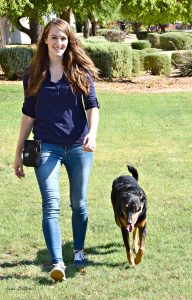
train my dog, az dog sports, dog training phoenixWork with a professional trainer or behaviorist

A professional trainer can help you evaluate the pets in your home, and the temperament of any new potential additions. They can suggest specific positive reinforcement training to help you navigate this new addition.

If you have questions or need assistance evaluating or bringing a new dog into your household, please give us a call.  We can help!

602-237-6775

Save

Save

Dog Games – Solving Boredom in Your Dog

If you have an active dog (or dogs) like I do, the hot summers of Phoenix are extra brutal. My dogs and I come down with summertime cabin fever, but we are trapped in the A/C most of the time.  Insert…Dog Games! I had to learn to change my own perspective on exercising my dogs to find options for safely tiring out my high-energy dogs without having to leave the house.

Most dogs love physical exertion, but all dogs need mental stimulation.  I have discovered over the years that if you can achieve mental stimulation and really make your dog think hard you are also physically tiring your dog. I know that my dogs find exercise reinforcing, so I want to make sure I’m rewarding the right mindset when we exercise.

Option One: Go for a walk around the house.

Just because it’s too hot to go for a walk outside doesn’t mean you can’t go for a walk at all. You can give your dog a mental and physical workout by teaching them to follow you as you maneuver around obstacles in your house. The bonus of this game is that it improves your dog’s loose leash skills overall.

  • Exercising the mind is just as important as exercising the body.
  • Play loose leash walking drills inside that teach your dog to follow you.
  • Add extra effort to simple trips outdoors with dog-parkour behaviors.

In Phoenix it gets too hot to walk our dogs even with dog-boots and waiting for nightfall. Walking inside the house can allow you to exercise your dog while improving their loose-leash skills and overall body awareness.

Option Two: Making the most use of your space for activity and exercise.

dog game, solving boredom in your dog
Game One : My three dogs and cat searching for food in the grass, or something similar.
dog game, solving boredom in your dog
My Bordercollie using her nose to find kibble.

No matter how tiny your condo, there really is a way to find room for activities! Like with Game One, we’re focusing on working our dog’s brain even more than their body.  You can make obstacle courses and puzzle games out of almost any interior.

  • Long hallways are super useful for “send-away & return to me” games.
  • Grass in the yard is a built-in snuffle mat. Toss a handful of kibble across the grass.
  • Pool noodles make inexpensive and safe obstacles for your dog to jump over or crawl under.
solving dog boredom, dog game
DIY Obstacle Course in my hallway with pool noodles.

Option Three: Your dog can work for their food.

Your dog will actually love it. Working for their food helps give them purpose or fulfillment. Our goal is not to frustrate our dogs, nor to limit how much their eating, but instead to challenge them in a fun way.

  • Slow feed bowls are a great investment. Slowing your dog’s meals down helps prevent dangerous conditions like bloating while making the most of their favorite time of day.
  • DIY food dispensers, like this one here.  Or this one here.

Meal time can become training time. Have your dog search for their food or take half for a training session. You can practice your dog’s wait, or have someone hold their collar while you carry their bowl around the corner to a hiding spot.

  • Variety is important. Take Kong-stuffing to the next level with this idea.
  • Try free-shaping new behaviors. Play 101 things to do with a box.

Option Four: Set a new goal for you and your dog.

This could be a new sport or even just a new trick. Having something specific to work on will help you stay engaged with your dog. Taking a class at an indoor training facility is a great way to make sure you and your pup follow-through on your new goals. I’m working on canine freestyle tricks with one of my dogs, and taking indoor agility classes at AZDS.

  • Look on social media for inspiration and how-to’s.
  • Facebook pages and challenge groups can be a wealth of information.
  • Design a dog-work out plan with the help of Canine Conditioning & Body Awareness page on Facebook.

Get crafty. If you have a Pinterest account then you don’t have an excuse for not making tons of simple DIY options for new treats, toys, and puzzle games. Variety is the spice of life, mix things up for you and your dog.

Last but not least, remember that the summer can only last so long. In just a few more weeks outdoor training classes will start up again, and the blacktop will stop being hot enough to fry eggs. We’ll be watching the rest of the country surviving winter on the news again and having fun with our dogs in the Valley of the Sun.


Save

Save

Save

How I Became a Dog Trainer…

How I Became a Dog Trainer…how i became a dog trainer, Jaymie Cardin, dog trainer phoenix

~ By Jaymie Cardin

I became a dog trainer because it’s the only thing I have ever wanted to do. Well, maybe not the only thing.  I toyed with the idea of zookeeper or dog groomer; but that was before I knew dog training could be my sole career.

The Seed Is Planted

In high school, when I first thought I wanted to become a dog trainer, I started by taking service dog training classes. This is where it all began. After that first class, I knew there wouldn’t be anything else that could give me that kind of high.  After high school, I found it was difficult to continue in a dog training career because all the options were either too far away, meaning across the country; or they only offered online classes without the hands-on experience. I wanted something hands-on where I could go study in person.

In the meantime, I gained experience in other ways.  I volunteered at Power Paws assistance dogs and helped train other people’s dogs. This was good experience but I was still missing the crucial part of a classroom study.

Dog Trainer Schools

Then I found AZ Dog Smart Academy.

AZ Dog Smart Academy is a hands-on school dedicated to helping you become a dog trainer. The best part about this program is the ability to learn from multiple trainers with different backgrounds. During my time here I was encouraged to find other opportunities outside of the Academy. They recognized that I couldn’t learn everything from them, so they helped me find supplemental learning options from other high-quality dog training programs.

My New Dog Training Career

I have been with AZ Dog Smart Academy for over a year now. With my previous experience, dedication and other classes, I have now graduated to an instructor. I don’t know where I’d be if I hadn’t found AZ Dog Smart Academy, but I’m glad I never have to find out!

Read more about how you can become a dog trainer like Jaymie here!

Animal Assisted Therapy

Animal Assited Therapy, az dog sports, az dog smart academy, dog training

Animal Assisted Therapy

Society is starting to recognize that dogs have more value to offer those in need beyond the scope of assisting the physically handicapped.  A well trained obedient dog can offer a tremendous service to hurting people.  The concept and merit of “animal assisted therapy” is well known and accepted.  Even despite the lack of large-scale research studies on the emotional aspects of the topic.

Who was the first to discover the importance of dogs as therapy?

It’s hard to pinpoint when the therapeutic potential of animals was first recognized.  Many credit Florence Nightingale, an influential figure in the development of modern nursing, with discovering the significant anxiety-reducing effects of small pet animals on children and adults living in psychiatric institutions. In the 1930s, Sigmund Freud nudged the field forward when he began using his Chow, Jofi, during psychotherapy sessions. His findings in turn lent legitimacy to a paper on animal assisted therapy.  This paper was submitted by child psychologist Boris Levinson at an American Psychological Association meeting in the early 1960s.

Animal Assisted Therapy Benefits

Decades later, AAT programs can be found in nursing homes, hospitals, prisons, homes for disabled children, residential treatment facilities, as well as some libraries and schools. And we know for a fact that animals are good for our physical health. By their mere company, they reduce our blood pressure, slow our heart rates, facilitate faster healing, and improve our life expectancy.   (See, for example, the American Heart Association’s 2013 scientific statement saying that owning a dog lowers the risk of heart disease).

But there are strong indications that the positive effect of canine company extends to emotional and mental trauma, too. Dogs seem able to connect with autistic children and patients with Alzheimer’s. Petting a dog is cited by many mental health professionals as a catalyst that can help people otherwise silenced by grief and shock to open up.

How can Animal Therapy help me?

But why? The precise biological process behind the effect eludes researchers, but a number of theories exist. One component is a dog’s complete absence of judgment. Calm, well-trained dogs (and other pets) provide gentle physical affection and quiet presence.  This allows patients to focus their attention away from internal trauma and external environments—like hospital rooms or psychiatric institutions—that can exacerbate fear and loneliness. Some describe it as a “healing space” accompanying the dog, in which AAT recipients can feel safe and secure.  Therefore better able to express themselves and connect with healthcare providers.

The takeaway?  The benefits dogs can offer to members of our society is abundant.  As research continues, dogs seem destined for greater recognition as therapeutic partners.  Dogs can become these great partners by getting some strict obedience dog training.

If you think your dog would make a great therapeutic dog, give us a call to start your training today!
602-237-6775

As a certified dog trainer, you can join this up and coming career opportunity!

If you love helping people in need, becoming a dog trainer is something you should consider.


Save

Save

Save

Save

Beyond Obedience Dog Training

We Have Movie Stars in Our Midst!!

Debby Boehm’s Beyond Obedience Dog Training students recently took time from their class and created their first movie!

Watch as Puddy, Lola, Sasha, Bailey & Bentley show us how they “Give Back” to others.

  • « Previous Page
  • 1
  • …
  • 26
  • 27
  • 28
  • 29
  • 30
  • …
  • 39
  • Next Page »

azdogsports@msn.com

google review dog training, az dog sports, google arizona dog trainingAZ-Dog-Smart-Academy-Schools-for-dog-trainersdog*tec certified apdt_logoAZ Dog Sports earns Angies List Award

  • About / Contact
  • Train Your Dog
  • Become a Dog Trainer
  • Service Dog Training
  • More…

Copyright © 2026 · AZ Dog Sports, all rights reserved · Privacy Policy